
The Society for Range Management is the professional society dedicated to supporting persons who work with rangelands and have a commitment to their sustainable use. Rangelands comprise almost one-half of all the lands in the world. These lands are extremely important to society for the goods and services they produce and for the ecological services they provide. SRM is dedicated to the conservation and sustainable management of rangelands for the benefit of current societies and for future generations. The California-Pacific Section awards the “Excellence in Range Management” annually to ranch operators whose management improve these lands.
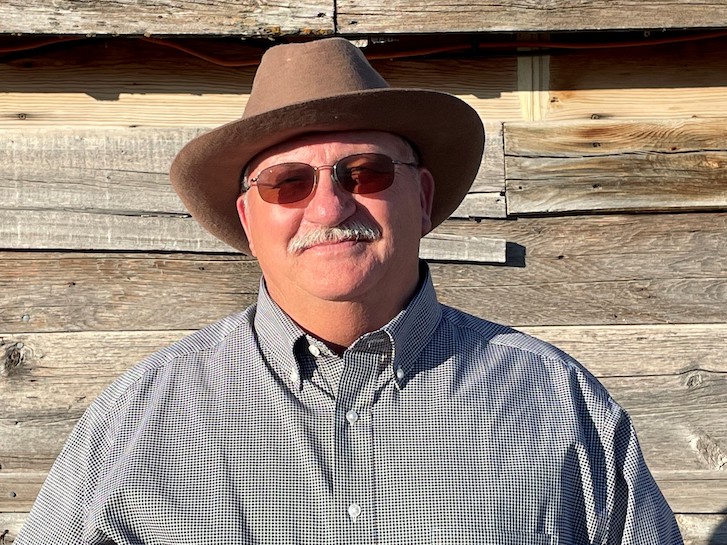
Tha California-Pacific Section, Society for Range Management named Henry and Pam Giacomini- recipient of the “Excellence in Range Management” award at the Fall River-Big Valley Cattlemen’s Association annual dinner on March 20, 2010.
Henry and Pam Giacomini own and manage Hat Creek Grown, a hay and livestock operation headquartered in Northeastern California. They moved to Hat Creek in 1988, starting with a small commercial herd on a small piece of land. Enterprises currently include cows and calves, pasture cattle, hay and direct sales of meat. Their operation is primarily based on leased private and federal lands.
They own or manage about 800 cows. The cows calve in the spring on leased winter pasture in the Sacramento Valley (annual rangeland) and summer on BLM and USFS lands in Shasta and Lassen Counties. The ability to continue to access public grazing lands is necessary to sustain their operation.
Henry and Pam recognized the role public lands could play in their operation and were confident enough in their management skills so they acquired additional grazing allotments in the early 1990’s. With the additional allotments Henry and Pam faced the challenge of working on both the Hat Creek and Eagle Lake Ranger Districts on the Lassen National Forest.
On the Hat Creek side, which includes the Bainbridge and Procter Creek allotments, Henry and Pam initiated meetings with their Range Conservationist and developed a management plan that provided flexibility for their operation and assured the resource would be protected as well. Henry and Pam asked the USFS for monitoring data for their allotments and learned that what had been collected was spotty. The methods used and sites monitored were inconsistent making it difficult to draw conclusions relating to grazing management and range trend. In 1994 Henry and Pam worked with their Range Conservationist and University of California Cooperative Extension to develop monitoring locations and a useful and repeatable data collection protocol on their Hat Creek Rim allotments.
On the Eagle Lake District Henry and Pam run cattle on the Champs allotment and on their private meadows in Champs Flat. In the early 90’s the District and other stakeholders were involved in an ambitious watershed planning process that encompassed the Eagle Lake Basin. Stated objectives were to improve water quality, riparian vegetation and streambank stability, and restore the native trout fishery while maintaining sustainable grazing operations. Henry and Pam were leaders in this process and implemented a multi-pasture rest-rotation system that incorporates both their federal and private grazing land. Their management system improves cattle distribution and allows control over the timing of use and rest periods – which is particularly crucial for riparian pastures. With some minor adaptations, they have successfully maintained this management system for over 15 years. While this system has been successful, it is achieved only through dedicated on the ground management.
In the early 1990’s they leased a ranch in Cassel for hay production (this ranch borders the Rising River). The owners clearly stated that grazing was not an option on this parcel. Henry and Pam educated the landowners on the benefits grazing could bring to their ground and were allowed to implement a grazing element. The owners have become supportive of grazing after experiencing the benefits of managed grazing first hand.
Henry and Pam have long been concerned about water quality and the potential impact their operation could have on it and have worked with the University of California on early research in this arena including intensive stream temperature monitoring, participating in riparian friendly grazing surveys, and participating in ranch water quality short-courses. They are not afraid to make change when the data indicates they may be having a negative impact on the resources they manage.
Henry and Pam Giacomini are ideal recipients for the Cal-Pac Section SRM “Excellence in Range Management” award. They have developed (and more importantly, continue to refine, change and rethink) a sustainable forage based livestock operation. They rely on sound economic and science based data while recognizing the importance of community in their decision-making processes. They have given back to society in countless ways through service on boards, committees and commodity organizations as well as generously contributed money to organizations and causes they believe in. It is fitting that Henry and Pam Giacomini be recognized for their “Excellence in Range Management.”
SRM:
The Society for Range Management is the professional society dedicated to supporting persons who work with rangelands and have a commitment to their sustainable use. Rangelands comprise almost one-half of all the lands in the world. They are extremely important to society for the goods and services they produce and for the ecological services they provide. SRM is dedicated to the conservation and sustainable management of rangelands for the benefit of current societies and for future generations
The Society for Range Management is a professional organization composed of individuals with a common interest in the study, management, and rational use of rangelands and related ecosystems. The Society's objectives include the development of an an understanding of range ecosystems and of the principles applicable to the management of range resources:
• to assist all who work with range resources to keep abreast of new findings and techniques in the science and art of range management;
• to improve the effectiveness of range management to obtain from range resources the products and values necessary for man's welfare;
• to create a public appreciation of the economic and social benefits to be obtained from the range environment;
• to promote professional development of its members.
Excellence in Range Management Award nomination form
Range Manager of the Year Award nomination form